
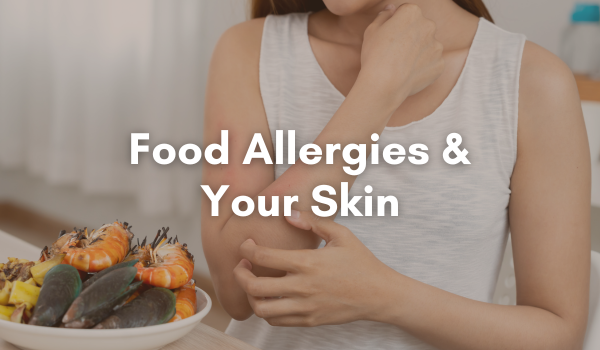
When you or your child develops a rash, hives, or intensely itchy skin, recently consumed food may not be the first thing that comes to mind, as many skin reactions in children are caused by triggers in the surrounding environment. However, since determining causation can often be difficult, it’s essential to weigh the possibility that food could be involved.
Certain food allergies can trigger noticeable skin reactions, especially in children. While an allergist helps identify the underlying allergy, a dermatologist may play a key role in diagnosing and treating the skin symptoms that result from these reactions, to minimize their impact on yours or your child’s lifestyle.
In this blog, we’ll consider which food allergies most commonly affect the skin and what those reactions may look like on the skin of children or adults.
What Food Allergies Affect the Skin?
Food allergies are most common in infants and young children, though they can affect anyone. According to major medical sources including the Cleveland Clinic and WebMD, the most common food allergens in children include:
- Milk (specifically cow’s milk)
- Eggs
- Peanuts
- Tree nuts
- Soy
- Wheat
- Fish
- Shellfish
These foods account for the majority of allergic reactions in children, although there may be isolated cases or sensitivities to other items beyond this list. When a child with a food allergy eats even a small amount of the trigger food, their immune system will often react as though it’s under attack. This immune response releases chemicals like histamine, which can cause inflammation in the skin, so if you’re experiencing itchy skin and suspect a food allergy may be responsible, one or more of the foods listed above may be involved.
It’s also important to note that reactions can range from mild skin irritation to more serious systemic responses. If your child ever shows signs of difficulty breathing, facial swelling, or other severe symptoms, seek emergency care immediately.
Common Skin Reactions to Food Allergies
Although some people may experience non-skin-related allergic reactions to some foods, like nausea, mouth tingling, or loss of consciousness, in many cases the skin is the very first place allergic symptoms show up.
Hives (Urticaria)
Hives are one of the most recognizable allergic skin reactions. Hives may appear as raised, red or skin-colored welts, or itchy patches that may move around the body, and they are often accompanied by swelling that can change shape or location
Hives often develop quickly after eating a trigger food. They may last a few hours or persist longer depending on the severity of the reaction. If the welts are itchy, large, and emerge seemingly out of nowhere, they are probably hives.
Skin Rash (Allergic Contact Dermatitis)
Contact dermatitis is a broad category for a skin rash that can be triggered by contact either with an irritant (irritant contact dermatitis) or an allergen (allergic contact dermatitis). Irritants and allergens can include nearly anything from pollen to ingredients in cosmetic products, but food ingredients can also trigger contact dermatitis, whether through direct skin contact (especially common with tomatoes, citrus fruits, or raw meats and fish) or through ingestion of the allergen resulting in a rash on the skin.
Symptoms of allergic contact dermatitis may include redness, small bumps or blisters, dry or cracked skin, and burning or itching. Particularly in children, rashes may appear around the mouth after eating certain foods, or they may occur more broadly across the body. While this type of reaction can appear mild, evaluation by a pediatric dermatologist is recommended if rashes are persistent or recurring.
Itchy Skin (Pruritus)
Pruritus is the medical term for itchy skin. Very frequently, a child may experience intense itching without any visible evidence of hives or a skin rash. Itching alone can be a symptom of a food allergy. Histamine release may stimulate nerve endings in the skin, causing uncomfortable itching even when redness or bumps on skin are minimal.
Persistent itching can disrupt sleep, worsen existing skin conditions, and lead to scratching that breaks the skin barrier, increasing the risk of infection. If itchy skin from food allergies is disruptive, over-the-counter antihistamines and hydrocortisone creams can be used to help manage symptoms. Contact your doctor if the itching is persistent or the cause remains unclear.
Atopic Dermatitis (Eczema) & Food Allergies
For children who already have eczema (atopic dermatitis), food allergies can act as a trigger that worsens flare-ups.
Eczema is a chronic inflammatory skin condition characterized by dry, scaly patches, red or darkened skin, and intense itching. Areas of the skin may become thickened from repeated scratching.
Research suggests that food allergies may exacerbate eczema in some children, particularly infants and young kids with moderate to severe atopic dermatitis. While not every child with eczema has a food allergy, and not every food allergy causes eczema, the two conditions may still overlap.
If your child’s eczema flares consistently after eating certain foods, this may signal a potential trigger in the food. However, it’s important not to eliminate foods entirely without medical guidance from your pediatrician, as unnecessary dietary restrictions can impact nutrition and growth.
When to See a Dermatologist or Another Healthcare Provider
Because food allergies often result in a skin reaction, dermatologists are frequently the first specialists parents consult, besides a pediatrician or primary care physician.
At Vujevich Dermatology Associates, we help families determine whether a rash, hives, or itchy skin may be allergy-related and offer guidance on how to calm inflamed, reactive skin, how to manage eczema that may be worsened by food triggers, and how to repair and protect the skin barrier. Our dermatologists may provide care for the skin condition itself; however, an allergist may be recommended if testing is needed to identify and manage the underlying allergic cause.
Whether resulting in hives and rashes or triggering eczema flare-ups, food allergies can have a significant impact on your child’s skin. If you’re wondering what specific food allergies may be causing rashes or itchy skin in your child, don’t wait to reach out to a medical provider.
If your child is experiencing unexplained itching, frequent hives, or worsening eczema, schedule an appointment with Dr. Elizabeth Froelich, our pediatric dermatologist serving the Pittsburgh area. She can evaluate your child’s skin, provide treatment to relieve symptoms, and help determine whether an allergy may be involved. Maintaining the health of your skin starts with correct diagnosis, and we are here to help guide you every step of the way.
Vujevich Dermatology Associates offers medical, surgical, and cosmetic dermatology from some of the most highly trained physicians and clinicians in the greater Pittsburgh area. You can reach our team at (412) 429-2570 or visit our contact page to see all of our locations. You can also follow us on Facebook and Instagram to see what’s new in the world of dermatology.