
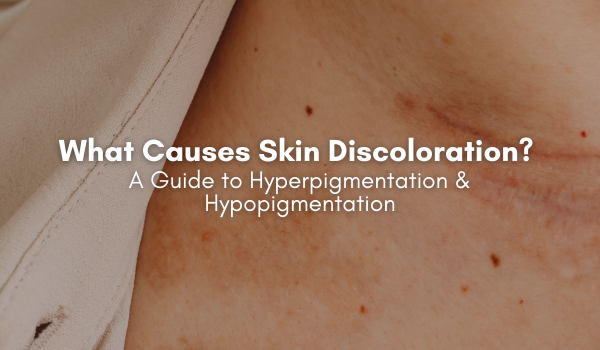
Skin discoloration is one of the most common concerns patients bring to dermatologists, although the reasons behind the changes in color often vary, with anything from a sudden infection to a long-term birthmark triggering the discoloration. Changes in skin tone can appear gradually or abruptly, and understanding why they happen is the first step toward effective treatment. Skin discoloration refers to any area of skin that becomes darker or lighter than your natural tone. This includes hyperpigmentation (too much melanin) and hypopigmentation (too little melanin).
Below, we break down the basics of what causes skin discoloration, let’s consider the differences between hyperpigmentation and hypopigmentation, as well as the most well-known conditions in each category.
What Causes Skin Discoloration?
Skin discoloration refers to any patch of skin that has a different tone than your body’s normal color. Since melanin is the pigment that gives your skin (as well as your hair and eyes) their color, discoloration occurs when the body produces either too much melanin (called “hyperpigmentation”) or too little melanin (called “hypopigmentation”). When melanin production changes, even in small amounts, visible patches of discoloration can appear.
Common causes of skin discoloration include:
- Sun exposure
- Hormonal changes
- Skin injury or inflammation
- Genetic conditions
- Autoimmune processes
- Certain medications
- Underlying medical conditions
Skin discoloration can show up anywhere but is especially common on the face, making it a frequent cosmetic concern. While the causes vary, many forms of discoloration can be improved or managed with the right diagnosis and treatment plan.
What Is Hyperpigmentation?
Hyperpigmentation occurs when melanocytes (melanin-producing cells) become overactive, leading to darker spots or patches on the skin. Causes may include sun exposure, hormonal shifts, inflammation, or genetics.
Hyperpigmentation may appear as:
- Flat brown or tan patches
- Freckles or sunspots
- Darkened areas after rashes, acne, or eczema
- Hormonal pigmentation during pregnancy or with birth control
Let’s unpack a few common forms of hyperpigmentation.
What Is Melasma?
Melasma is a form of hyperpigmentation linked to hormonal changes, often appearing on the cheeks, forehead, and upper lip. It is especially common during pregnancy, with hormone therapy, or after significant sun exposure.
What causes melasma?
Melasma occurs when hormones stimulate excess melanin production, and it can be easily worsened by UV exposure.
How to get rid of melasma:
Treatment for melasma may include prescription topical treatments like hydroquinone, tretinoin, corticosteroids, or other medications. These work by lightening the affected areas of the skin. Some hydroquinone for melasma gels are available over the counter, while others require a prescription.
Some cosmetic procedures like chemical peels, laser treatment, or light-based therapy may also help address the effects of melasma. Because melasma can be stubborn, treatment is often ongoing and customized to each patient; speak to your dermatologist about what treatment might be best for you.
If you are prone to melasma, avoiding known triggers like heat and UV exposure, and using consistent sun protection, are essential steps to prevent continued discoloration.
What Are Sunspots?
Sunspots, also called solar lentigines or age spots, are caused by cumulative UV exposure over time. They typically appear on areas that get the most sun: the face, chest, shoulders, forearms, and hands.
How to get rid of sunspots:
If you are seeing brown spots after sun exposure, visit your dermatologist. Depending on your situation, your dermatologist may recommend anything from topical treatments to cosmetic procedures to brighten the skin.
In addition to cosmetic treatments like laser treatments or chemical peels, photodynamic therapy is a common procedure that uses a photosensitizing drug to apply light therapy to treat sun damaged skin.
Sun protection at all times, but especially during increased periods of sun exposure, like time at the beach or the park, is essential to maintain in order to prevent new spots from forming. Check out our full list of summer beauty tips for preventing sun damage and more.
Other Causes of Hyperpigmentation
Melasma and sunspots aren’t the only causes of hyperpigmentation. Some other causes include:
Post-inflammatory hyperpigmentation (PIH)
These dark marks may appear after acne, eczema, rashes, or injury, with the healing process accompanied by melanin overproduction. Topical agents like hydroquinone, chemical peels, or laser treatment may be used to lessen the effects of PIH.
Birthmarks
Some pigmented birthmarks, such as café-au-lait spots or congenital melanocytic nevi, fall under the umbrella of hyperpigmentation. Depending on the birthmark, laser therapy, medications, or surgical removal may be recommended.
Medication-induced pigmentation
Certain drugs, such as some antibiotics and chemotherapy agents, can stimulate excess pigment production. Consult your prescribing doctor if this becomes a concern.
What Is Hypopigmentation?
Hypopigmentation occurs when the skin produces too little melanin. This results in lighter patches or spots, which may be temporary or permanent depending on the cause.
Hypopigmentation can appear as:
- Pale or white patches
- Areas that do not tan
- Spots that develop after skin injury or inflammation
Let’s consider some of the most common conditions associated with hypopigmentation.
What Is Vitiligo?
Vitiligo is an autoimmune condition in which the body mistakenly attacks melanocytes. This leads to well-defined, depigmented (white or light-colored) patches on the skin or hair.
What causes vitiligo?
Vitiligo occurs when the immune system targets pigment-producing cells. Genetics may play a role, and triggers such as stress or skin injury may contribute.
Most vitiligo treatments focus on slowing the progression of the condition or restoring the loss of skin color. Treatment options vary but may include topical corticosteroids or calcineurin inhibitors or light therapy. For extensive cases of vitiligo, depigmentation therapy may be recommended. Although vitiligo cannot be cured permanently, research for more effective treatments and cures is currently underway.
What Is Albinism?
Albinism is a rare genetic condition in which individuals are born with little to no melanin in their skin, hair, or eyes.
What causes albinism?
Albinism is caused by inherited gene mutations that affect melanin production, leading to hypopigmentation. Unlike many other pigment conditions, albinism is present from birth and does not change substantially over time.
People with albinism must be especially diligent with maintaining sun protection and regular skin checks due to their increased UV sensitivity.
Other Causes of Hypopigmentation
Post-inflammatory hypopigmentation
Similar to dark spots that appear after inflammation, lighter spots may also remain after eczema, psoriasis, burns, or other irritations. Depending on the situation, a doctor may prescribe topical medications or phototherapy, or address the underlying cause itself. Make sure to use sun protection on hypopigmented spots.
Pityriasis alba
This condition is common in children and appears as faint, scaly light patches on the face that leave behind spots of hypopigmentation. Pityriasis alba is harmless and typically goes away by adulthood.
Tinea versicolor
This fungal infection, caused by an overgrowth of yeast, can trigger the appearance of lighter or even darker patches on the skin, including white, yellow, red, pink or brown spots. If you develop tinea versicolor, your healthcare provider may prescribe topical or oral antifungal medications.
Scarring
Some scars heal with reduced pigment depending on the depth of injury. Depending on the scar, procedures like laser therapy, microneedling, or chemical peels may be helpful in reducing its hypopigmented appearance.
Finding the Right Treatment for Skin Discoloration
Skin discoloration, in either its hyperpigmentation or hypopigmentation forms, have so many possible causes that there is no one-size-fits-all solution for every case. However, there are many treatments including topical creams and cosmetic procedures like laser treatment that are available to treat skin discoloration due to many causes.
To find out what treatment or treatments you would be a candidate for, your best approach would be to start by seeing a dermatologist who can determine what type of discoloration you’re experiencing, help you understand why it’s happening, and suggest some next steps for addressing the issue. And even if your skin discoloration is not sun-related, it is important to take extra precautions to protect the discolored areas from the sun, as they may be more sensitive due to inconsistent melanin production.
At Vujevich Dermatology Associates, our board-certified dermatologists and expert providers diagnose and treat a wide range of pigment-related conditions, from melasma and sunspots to vitiligo and post-inflammatory pigmentation. Treatment options may include prescription topicals, chemical peels, laser therapy, light-based treatments, and tailored skincare guidance.
Don’t wait to start restoring your skin’s natural tone and confidence. If you’re dealing with skin discoloration on your face or body and want to understand how to fix it, our team is here to help. You can call us at 412-429-2570 or schedule a consultation at any of our locations in the greater Pittsburgh area, including Mt Lebanon, Pleasant Hills, and Washington. You can also follow us on Facebook and Instagram to see what’s new in the world of dermatology.